
On Monday, March 30, students from the Master’s program in Risk and Crisis Engineering (IRC), part of the Graduate School Sustainability & Transitions, presented the results of several months of work carried out at the request of the Graduate School’s partners on the theme: “Imagining the resilience of tomorrow: territories, infrastructures, and organizations facing contemporary crises.”

The 2025/2026 cohort of the M2 IRC program, accompanied by the professors as well as the various partners of the Graduate School Sustainability & Transitions.
Having Master’s students work on impactful projects: this is the objective championed by Amel Ben Rhouma, Director of the Master’s program in Risk and Crisis Engineering (IRC) and Coordinator of the Graduate School Sustainability and Transitions, who initiated this project:
“There is something very important to me: ensuring that students work on concrete, useful projects that address real, on-the-ground needs. The projects presented truly reflect the spirit of the program: understanding risks, but above all proposing concrete responses that are useful to territories, organizations, and society.”
The coordinator of the Graduate School therefore chose to have students work on real-life cases, in partnership with companies, institutions, and local authorities facing genuine challenges related to risk and environmental issues.
Partners at the heart of real-world challenges
For this first edition, three partners entrusted the students with concrete issues, supporting them throughout their work.
SNCF Réseau: anticipating and managing railway crises
Represented by Nicolas Pollet, National Infrastructure Crisis Room Manager, SNCF Réseau proposed two topics:
1. Decision-making in extreme crisis situations: criteria for triggering “STOP Circulation” measures
Identifying the decision-making conditions required to ensure the safety of the railway network while maintaining service continuity.
“When a storm arrives, we implement what we call a ‘STOP circulation,’ meaning trains are halted to let the storm pass and to avoid placing trains in dangerous situations.”

Students from the “STOP Circulation” group, accompanied by Nicolas Pollet, National Infrastructure Crisis Room Manager at SNCF Réseau (on the left).
2. More resilient railway infrastructure: rail networks and extreme heat
Analysis of the rail network’s vulnerabilities to extreme weather events and recommendations to strengthen infrastructure resilience.
“High temperatures during the summer cause disruptions to equipment. The goal is to anticipate and assess how this may evolve in the future in terms of the frequency and intensity of these phenomena.”

Students from the “Rail Network and Extreme Heat” group, accompanied by Nicolas Pollet, National Infrastructure Crisis Room Manager at SNCF Réseau (on the left).
City of Châtillon: preparing for crisis situations
The City of Châtillon, represented by Elodie Dorfiac, First Deputy Mayor in charge of Ecological Transition, Mobility, and Green Spaces, and Maud Montaletang, Deputy Director General for Population Services, commissioned a group of students to design a Municipal Safeguard Plan, an operational tool enabling a local authority to anticipate and effectively manage crisis situations.
“We would like to thank the students for their work on this essential decision-making tool.”

Students from the “City of Châtillon” group, accompanied by the municipal team of the city and Amel Ben Rhouma, Director of the Master’s in Risk and Crisis Engineering (IRC) and Coordinator of the Graduate School Sustainability and Transitions (on the right).
Université Paris Cité: adapting campuses to climate challenges
The Sustainable Development, Social and Environmental Responsibility (DDRSE) unit, represented by Sophie Gil, Vice-President for DDRSE, proposed a project focused on adapting campuses to heatwaves.
“As part of our overall plan, we wanted to involve students as closely as possible in DDRSE initiatives, regardless of their field of study, by developing collaborations with different programs. It is in this context that a project was assigned to Amel and her Master’s students in Risk and Crisis Engineering (IRC).”
This work made it possible to conduct a vulnerability assessment of three campuses, as well as to develop an adaptation plan for heatwave episodes in the context of accelerating climate change.
“This is an issue that affects both students and staff. This topic provides an overview of the risks and vulnerabilities of three university campuses, which will serve as a starting point. It is an initial dataset that we will then be able to reuse across all UPCité sites!”

Students from the “Resilient Campuses” group, accompanied by Sophie Gil, Vice-President for DDRSE at the university.
A professionalizing experience for students
Throughout the year, the Master’s students were involved in this large-scale project, directly engaging with real-world conditions. Hosted within partner organizations, they benefited from privileged exchanges with expert teams, enabling them to better understand the specific challenges of each assignment.
This immersion proved to be a true learning opportunity: students were able to apply their analytical skills to concrete situations, confront their hypotheses with operational constraints, and formulate recommendations tailored to clearly identified needs.
Master’s in Risk and Crisis Engineering: training experts in risk and crisis management
The Master’s in Risk and Crisis Engineering (IRC) is a work-study program that trains specialists capable of anticipating, analyzing, and managing complex risks faced by organizations, critical infrastructures, and territories. The program combines academic approaches with applied projects carried out in partnership with public institutions, local authorities, and professional organizations.
Read more
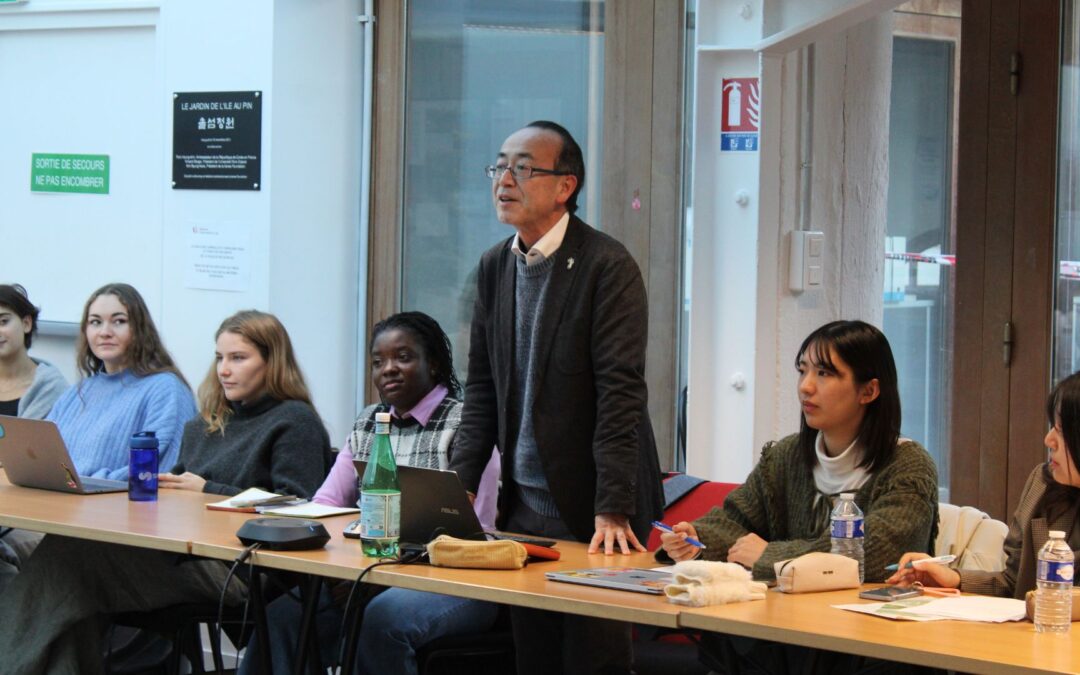
KEYS 2025 International Conference: A Franco-Japanese Meeting on Ecological Transitions with the University of Kitakyushu
The Graduate School Sustainability and Transitions co-organised a new edition of the international KEYS (Knowledge Exchange by Young Scholars) conference in partnership with the University of Kitakyushu. Held in a hybrid format between Paris and Kitakyushu, this...
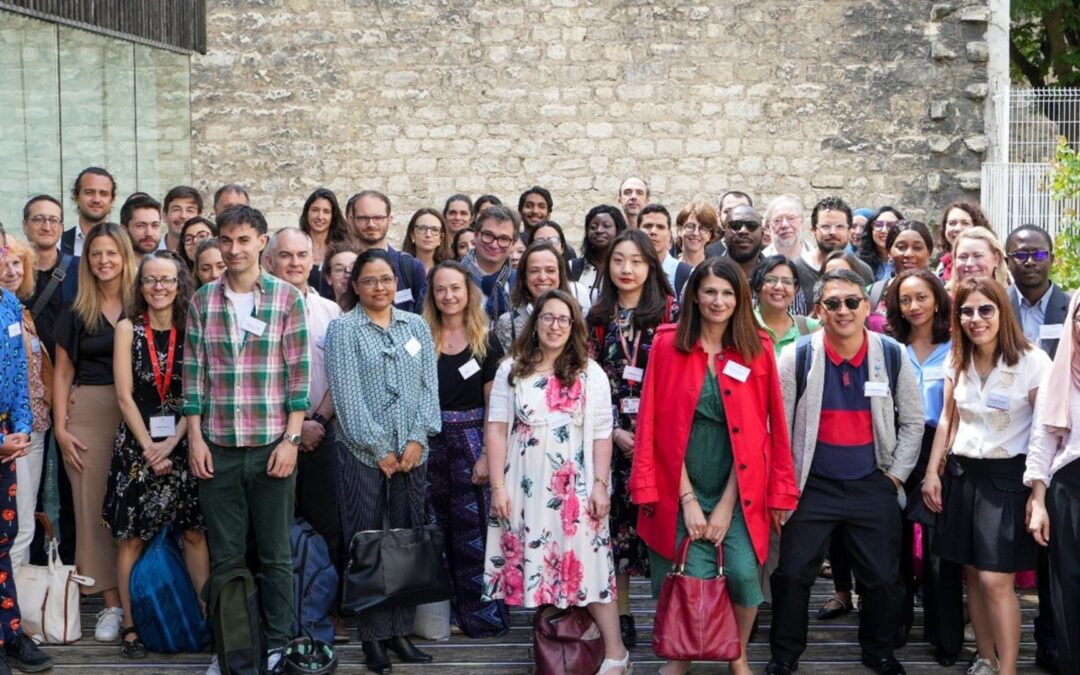
Back on the 2025 edition of the French congress on social and environmental accounting research (CSEAR)
For this 8th edition, the congress on social and environmental accounting research (CSEAR) highlighted ‘standardization and the sustainability transition.’ A theme that resonates with the changes in our world and with Université Paris Cité’s commitment to planetary...
![[International PhD] The University of Toronto and UPCité launch a new joint call for proposals](https://sustainability-transitions.u-paris.fr/wp-content/uploads/sites/13/2025/06/Appels_a-1080x675.jpg)
[International PhD] The University of Toronto and UPCité launch a new joint call for proposals
The University of Toronto and the Université Paris Cité and are launching a joint call for proposals in order to further develop their research collaboration and doctoral program strength. Lire la suite [International PhD] The University of Toronto and UPCité launch a new joint call for proposals
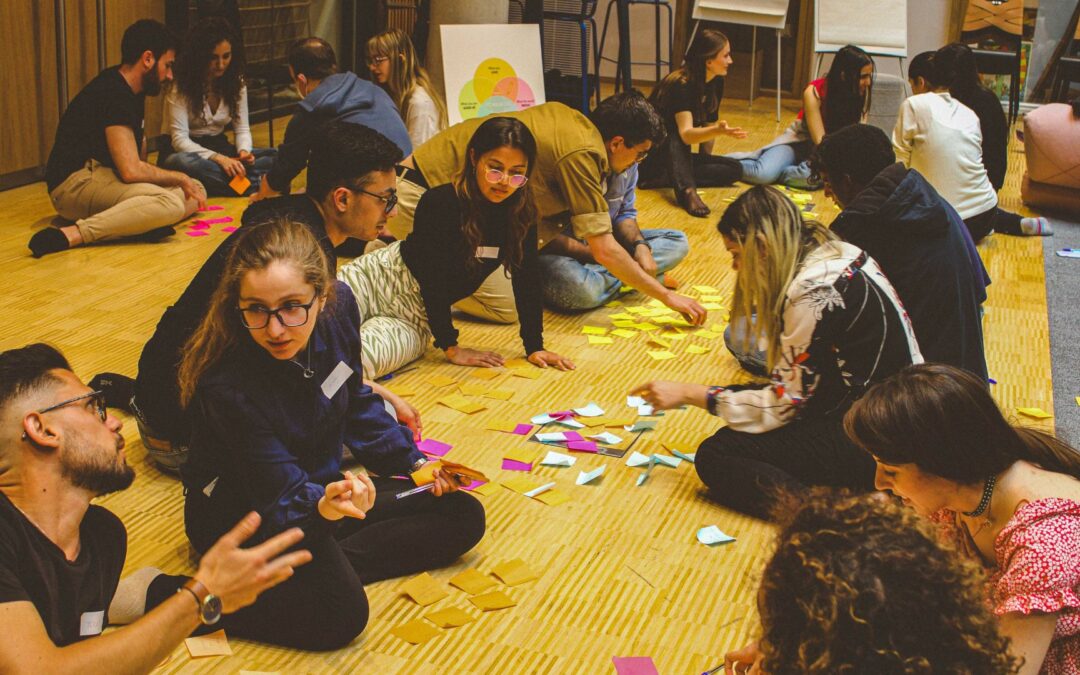
Studying in a Université Paris Cité Graduate School
Graduate Schools combine master’s degree and doctorate programmes, supported by research laboratories. This means that students can work on a wide range of relevant problems, benefiting from the diversity of these courses and the feedback of students who have… Lire la suite Studying in a Université Paris Cité Graduate School